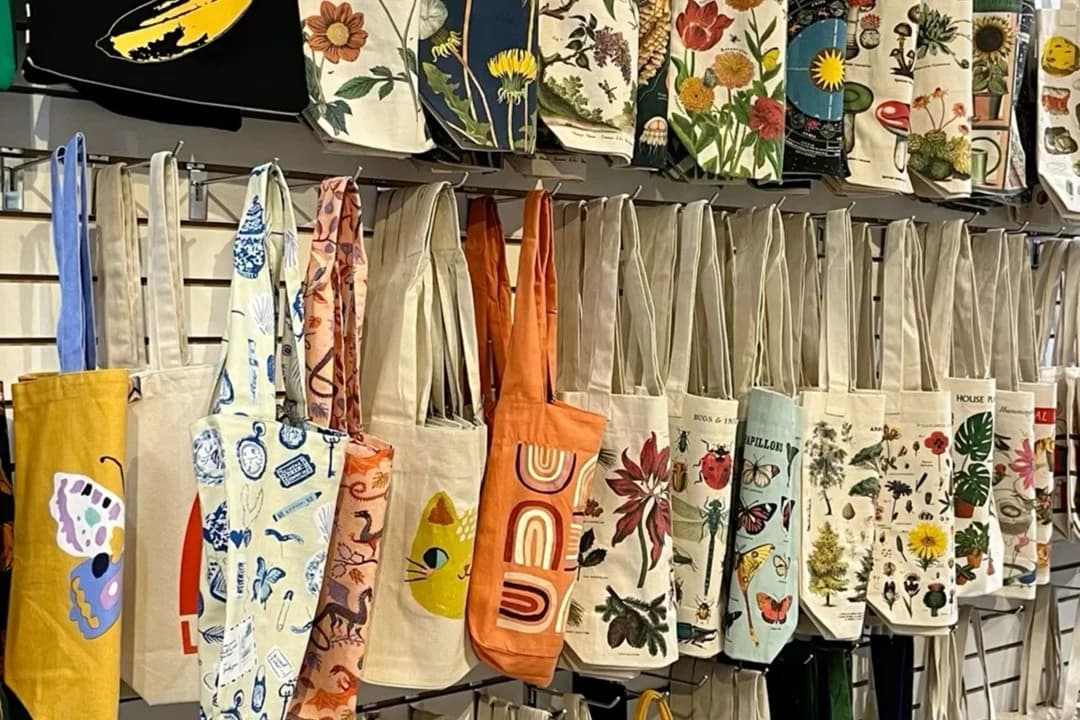

As businesses and consumers become more conscious of their environmental impact, the demand for sustainable alternatives to conventional packaging and reusable bags continues to grow. Among the many options available, organic cotton bags have become a popular choice for retailers, brands, promotional companies and environmentally conscious consumers.
But what actually makes organic cotton bags better for the environment?
The answer goes beyond simply using a natural fabric. Organic cotton is grown under agricultural standards that restrict or prohibit many synthetic chemicals and genetically modified seeds, while reusable cotton bags can help reduce reliance on disposable packaging when they are used repeatedly.
For businesses looking to source sustainable bags, understanding these environmental benefits can help when choosing materials, developing products and communicating sustainability initiatives to customers.
What Is Organic Cotton?
Organic cotton is cotton grown according to recognized organic agricultural standards. Compared with conventional cotton production, organic farming generally places greater emphasis on soil health, biodiversity, and reducing reliance on synthetic agricultural inputs.
Depending on the certification standard and country, organic cotton production may restrict the use of synthetic pesticides and fertilizers and prohibit genetically modified cotton seeds.
The result is a natural textile that can be used to manufacture a wide range of products, including:
- Organic cotton tote bags
- Shopping bags
- Drawstring bags
- Cosmetic bags
- Produce bags
- Grocery bags
- Promotional bags
- Gift bags
- Travel pouches
- Reusable packaging bags
For B2B buyers, organic cotton can therefore provide a material option for creating reusable products with a stronger sustainability story.
1. Organic Cotton Supports More Sustainable Farming Practices
One of the primary environmental advantages of organic cotton comes from how it is cultivated.
Conventional agriculture can rely heavily on synthetic pesticides and fertilizers. Organic farming systems instead use practices such as crop rotation, biological pest management, composting and other methods intended to maintain soil fertility and manage pests.
These practices can contribute to healthier agricultural ecosystems when implemented effectively.
Healthy soil is important because it supports microorganisms, improves soil structure and helps agricultural land retain nutrients and water.
For brands purchasing organic cotton bags wholesale, choosing certified organic cotton can therefore be part of a broader approach to responsible material sourcing.
2. It Can Help Reduce Reliance on Synthetic Agricultural Chemicals
Organic cotton standards generally restrict synthetic pesticides and fertilizers.
This matters because agricultural chemical use can have environmental consequences when chemicals enter surrounding soil, waterways, or ecosystems. Organic farming approaches aim to reduce these inputs through alternative pest and nutrient-management techniques.
However, it is important to avoid presenting organic cotton as completely chemical-free. Organic agriculture still uses substances and farming inputs and the exact requirements vary according to the applicable certification standard.
The more accurate distinction is that certified organic production follows defined rules designed to limit certain synthetic inputs.
3. Organic Cotton Can Support Soil Health
Soil is one of the most important natural resources in agriculture.
Organic farming systems commonly use practices designed to maintain or improve soil quality, including crop rotation, organic matter management, cover crops and composting.
Better soil management can support:
- Soil biodiversity
- Nutrient cycling
- Water retention
- Soil structure
- Long-term agricultural productivity
Because cotton is an agricultural crop, the environmental performance of the material begins long before the cotton reaches a textile factory.
For businesses evaluating sustainable materials, considering how a fiber is grown is therefore just as important as considering the finished product.
4. It Can Benefit Agricultural Biodiversity
Biodiversity includes plants, insects, microorganisms, animals and other organisms that interact within an ecosystem.
Farming practices that reduce dependence on certain synthetic pesticides and encourage crop diversity can create conditions that are more supportive of biodiversity.
Organic cotton farms may incorporate practices such as crop rotation and natural pest-management methods. These approaches can provide benefits beyond the cotton crop itself.
For sustainability-focused brands, this makes organic cotton an attractive option when building product lines that emphasize natural and responsible materials.
5. Organic Cotton Bags Are Reusable
The environmental advantage of a cotton bag isn't only determined by how the cotton is grown.
How the bag is used matters too.
A reusable bag can replace many single-use bags over its useful life. The more frequently a bag is reused, the more opportunities it has to offset the environmental impacts associated with its production.
For example, a durable organic cotton tote can be used for:
- Grocery shopping
- Retail purchases
- Farmers' markets
- Library visits
- Everyday commuting
- Promotional events
- Gift packaging
- Trade shows
This makes reusable organic cotton bags particularly useful for businesses that want to combine functionality with a sustainability-oriented product message.
6. Cotton Is a Natural Fibre
Cotton is a plant-based natural fiber.
Unlike synthetic fibers made primarily from fossil-based raw materials, cotton originates from an agricultural crop. This difference is one reason cotton is frequently considered when businesses are searching for alternatives to synthetic textiles.
However, “natural” does not automatically mean “zero environmental impact.”
Growing cotton requires land, water, energy, and agricultural resources. Manufacturing the fiber into yarn and fabric also requires processing.
Therefore, organic cotton should be viewed as a potentially more responsible material choice under appropriate conditions, rather than a completely impact-free material.
7. Organic Cotton Bags Can Be Designed for Long-Term Use
Durability is an important part of sustainability.
A bag that is used only once has a very different environmental profile from a bag that remains functional for months or years.
For B2B buyers, selecting appropriate fabric weight, stitching, handles, seams and construction can make a significant difference to product longevity.
A well-designed organic cotton bag can be used repeatedly for shopping, storage, travel, events and everyday activities.
From a manufacturer's perspective, durability should therefore be considered alongside the choice of organic cotton itself.
8. They Offer an Alternative to Disposable Packaging
Many retailers use disposable bags for carrying products from the store to the customer's home.
Reusable cotton bags provide an alternative model.
Instead of being treated as temporary packaging, a bag can become a useful product that customers continue using after their original purchase.
This creates an opportunity for brands to turn packaging into part of the customer experience.
For example, a clothing company could use an organic cotton tote as retail packaging. A cosmetic brand could provide an organic cotton pouch with a product set. A promotional company could supply branded cotton bags at an event.
The packaging can then continue to serve a purpose after the original transaction.
9. Organic Cotton Bags Are Suitable for Branding
Sustainability is increasingly incorporated into brand identity and product design.
Organic cotton bags provide a large printable surface that can be used for:
- Company logos
- Brand messaging
- Artwork
- Product information
- Campaign graphics
- Event branding
- Sustainable-living messages
For B2B buyers, this makes the bags useful not only as reusable products but also as marketing tools.
A customer carrying a branded reusable bag can effectively become a moving brand ambassador, extending visibility beyond the original point of purchase.
10. They Can Support Sustainable Product Collections
Businesses increasingly want sustainability to be reflected across their product ranges rather than in a single item.
Organic cotton bags can complement other environmentally oriented products such as:
- Reusable shopping bags
- Organic cotton pouches
- Fabric produce bags
- Reusable packaging
- Cotton toiletry bags
- Sustainable promotional merchandise
- Natural-fiber accessories
For retailers and private-label brands, this creates opportunities to develop coordinated collections around natural materials and reusable products.
11. Certification Matters
Not every product described as “organic cotton” provides the same level of verification.
This is an important consideration for B2B buyers.
Certifications can provide independent verification that cotton has been produced and/or processed according to specific standards. Depending on the market and the type of claim being made, buyers may encounter certifications such as Global Organic Textile Standard (GOTS).
The exact scope of a certification matters.
For example, a certification may address the organic status of the fibre, while another standard may cover broader processing and social or environmental requirements.
Before placing a bulk order, businesses should ask suppliers for appropriate certification documentation and verify that the certification applies to the material and product being purchased.
12. The Whole Supply Chain Should Be Considered
Choosing organic cotton is only one part of creating a more sustainable bag.
B2B buyers should also consider:
Material sourcing
Where is the cotton grown and can its organic claims be verified?
Manufacturing
What processes are used to turn the fiber into fabric and finished bags?
Dyes and printing
What dyes, inks, and printing methods are used?
Packaging
Can unnecessary plastic packaging be reduced?
Transportation
How far does the product travel before reaching the customer?
Product durability
Is the bag strong enough to be reused many times?
End of life
What happens to the bag when it is no longer usable?
Taking a lifecycle approach gives businesses a more realistic picture of environmental performance.
Organic Cotton vs. Conventional Cotton
It is tempting to say that organic cotton is always environmentally superior to conventional cotton in every category. The reality is more complicated.
The environmental impact of cotton depends on many factors, including farming practices, climate, irrigation, fertilizer use, pest management, processing, energy sources, transportation, product durability and how frequently the finished product is used.
Organic cotton's main advantages generally relate to its production standards and restrictions on certain agricultural inputs.
This means businesses should look beyond simple marketing claims and evaluate the complete supply chain.
Organic Cotton vs. Synthetic Bags
Organic cotton and synthetic materials have different environmental characteristics.
Synthetic bags can be lightweight and durable, but many are made from fossil-based materials. Depending on the material, they may also contribute to concerns associated with plastic pollution and synthetic textile waste.
Organic cotton is plant-based and biodegradable under appropriate conditions, although the actual end-of-life behavior of a finished cotton bag depends on factors such as dyes, coatings, blends, trims and other materials used in its construction.
For businesses seeking a natural-fiber option, organic cotton can therefore be an attractive alternative.
What B2B Buyers Should Look for When Sourcing Organic Cotton Bags
If you are a retailer, distributor, importer or private-label brand, don't evaluate an organic cotton bag based only on the word “organic.”
Consider the following factors:
1. Certification
Ask whether the organic cotton is certified and request relevant documentation.
2. Fabric Weight
Choose a fabric weight appropriate for the intended use. Lightweight bags may suit promotional applications, while heavier fabrics can be better for repeated shopping use.
3. Stitching Quality
Strong seams and reinforced handles can increase the useful life of the bag.
4. Printing Method
Ask about the printing process, ink, durability and care requirements.
5. Customization
If the product is for your own brand, consider custom dimensions, colours, handles, labels, pockets, closures, and packaging.
6. Packaging
Avoid unnecessary packaging where practical, particularly when ordering large quantities.
7. Supplier Transparency
Choose a supplier that can provide clear information about materials, production, certifications, specifications and quality control.
Why Organic Cotton Bags Are Becoming Popular for Businesses
For B2B buyers, organic cotton bags offer several advantages at the same time.
They can provide a combination of:
Natural material + reusable design + customization + branding + sustainability positioning
This makes them suitable for a wide variety of commercial applications.
Retailers can use them as shopping bags. Beauty brands can use them as product packaging. Companies can distribute them as promotional merchandise. Hotels, events and travel businesses can use them for welcome kits and guest products.
The versatility of the format is one of its strongest commercial advantages.
The Importance of Reuse
The environmental value of a reusable bag depends heavily on actual reuse.
A durable bag that is repeatedly used generally has a better opportunity to justify the resources required to manufacture it than a bag that is discarded after one use.
Businesses can encourage reuse by producing bags that customers genuinely want to keep.
Useful features include:
- Attractive designs
- Comfortable handles
- Durable construction
- Practical sizes
- Washable fabrics
- Multiple compartments or pockets
- Foldable designs
- Strong stitching
Sustainability and product design therefore go hand in hand.
How Manufacturers Can Make Organic Cotton Bags More Sustainable
Manufacturers have an important role to play beyond simply selecting organic cotton fabric.
They can improve the overall product by:
- Optimizing fabric consumption
- Reducing unnecessary components
- Improving cutting efficiency
- Designing for durability
- Using appropriate packaging
- Offering responsible printing options
- Providing transparent material information
- Supporting certification requirements
- Developing reusable and multifunctional designs
For B2B customers, these factors can help create a more credible sustainability proposition.
Final Thoughts
Organic cotton bags can be a more environmentally responsible choice when they are responsibly produced, designed for durability and used repeatedly.
Their potential environmental benefits begin at the farm, where organic production standards can reduce reliance on certain synthetic agricultural inputs and encourage soil and ecosystem-friendly practices. Those benefits can be complemented by the reusable nature of the finished bag.
However, sustainability is not determined by material alone.
The most responsible approach is to consider the entire lifecycle—from cotton cultivation and textile processing to manufacturing, packaging, transportation, repeated use and end of life.
For businesses sourcing reusable bags, choosing a reputable supplier, verifying organic claims, selecting durable construction and designing products customers will actually reuse are all important steps.
When these factors come together, organic cotton bags can provide a practical, customizable, and sustainability-focused solution for retailers, brands, distributors and other B2B buyers.
admin
Providing deep insights into sustainable packaging, eco-friendly business practices and the jute manufacturing industry.